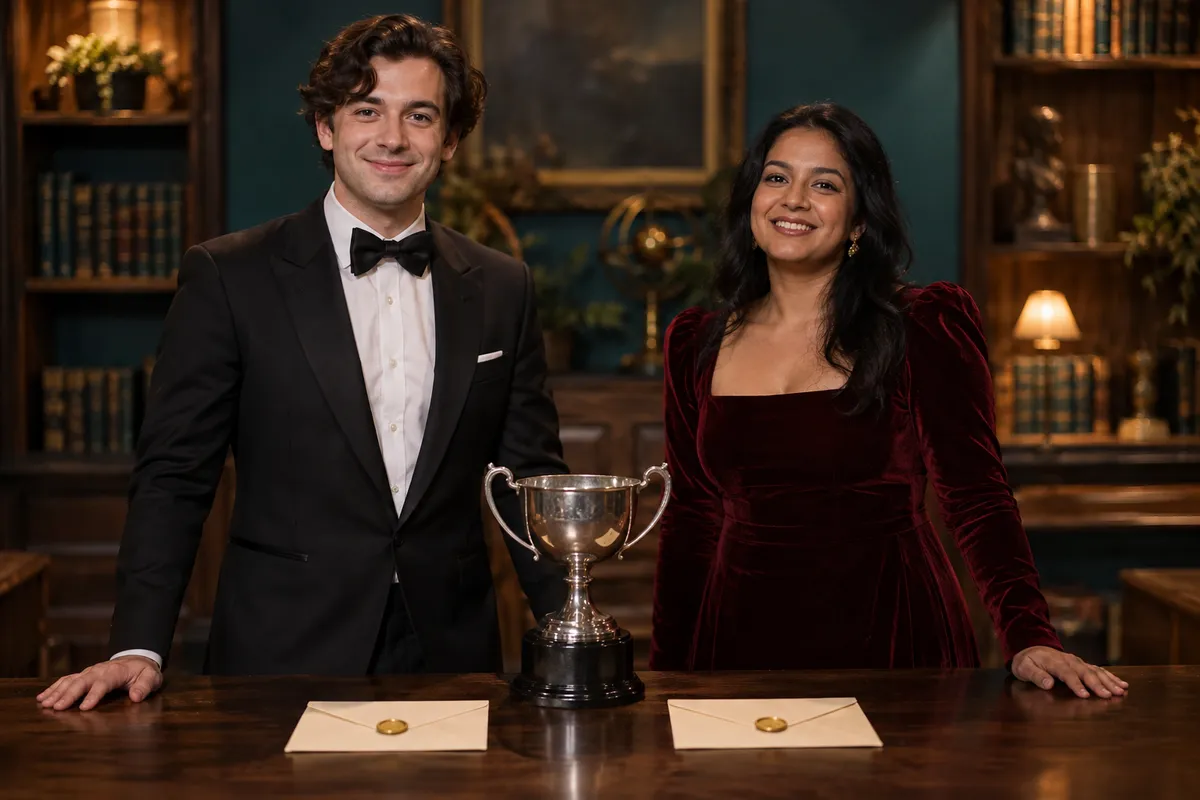
The secret is out, and the winners sound like people who just set down something heavy. Sebastian Croft and Romesh Ranganathan won the second series of The Celebrity Traitors, splitting £83,000 for charity, and the BBC reports they're relieved to finally be able to talk about it. The headline quote says it all: "It's been killing me!"
The finale aired on Friday and drew 11.2 million live viewers, per the BBC, with bigger numbers expected once iPlayer catches up. That's the kind of figure that makes a reality show feel less like a show and more like a national event.
The angle: why a finale this big is really about keeping a secret
The BBC's framing of the winners' relief is the most revealing part of the story. Think about what the format asks of its cast: they play a game of lies, then have to go home and sit on the outcome until the rest of the country catches up. Croft and Ranganathan have effectively been carrying around a spoiler worth £83,000 and an 11.2-million-person audience.
That's a big part of why the show works as a shared-TV moment. Everyone watching is in on the same slow reveal, and the people who already know the ending can't say a word. It's hard not to wonder whether the pressure of that silence is half the fun for viewers who like to imagine the winners biting their tongues at dinner parties.
The endgame, as reported
Per the BBC, two moves shaped the finish:
- Croft pushed to banish King Kenny.
- Kenny, in turn, turned on fellow traitor Maya Jama.
Those are the facts we have, and they're juicy enough on their own. A traitor turning on another traitor is the show's oldest trick, the moment a game of loyalty reveals that loyalty was always conditional. Whether Kenny's play was smart or messy is a matter of taste, and the reaction to it is exactly the sort of post-finale debate the series seems built to generate. My own read: a betrayal that ends up in the finale conversation is rarely a failure of drama, whatever it was as strategy.
The unlikely duo
A comedian and an actor sharing a trophy is an easy pairing to root for, and the charity split gives the win a warmer glow than a straight cash prize would. The BBC doesn't detail how the two came together beyond Croft's push against Kenny, so I won't invent a backstory. What can be said is that the pair's relief at being free to discuss it suggests they were both heavily invested in the game, which is more than you can say for some contestants on shows like this.
Why it keeps pulling people in
The BBC's reporting points to a show that has become a UK appointment-viewing event, driving fan theories, social clips and the sort of morning-after chat that used to belong to soap finales. The ratings back that up: 11.2 million live viewers is a number few broadcasters see anymore, in an era when most big shows get spread thin across streaming.
If you haven't caught up, iPlayer is where the numbers are still growing. And if you have, the next few days will be full of people re-litigating every banishment, every glance and every lie.
The takeaway
The real winners of a show like this may be the viewers, who get a week of arguing about who lied best. But Croft and Ranganathan get something rarer: permission to stop pretending. After all that deception, the most satisfying line of the whole series might be the plain, honest one: it's been killing them, and now they can say so.