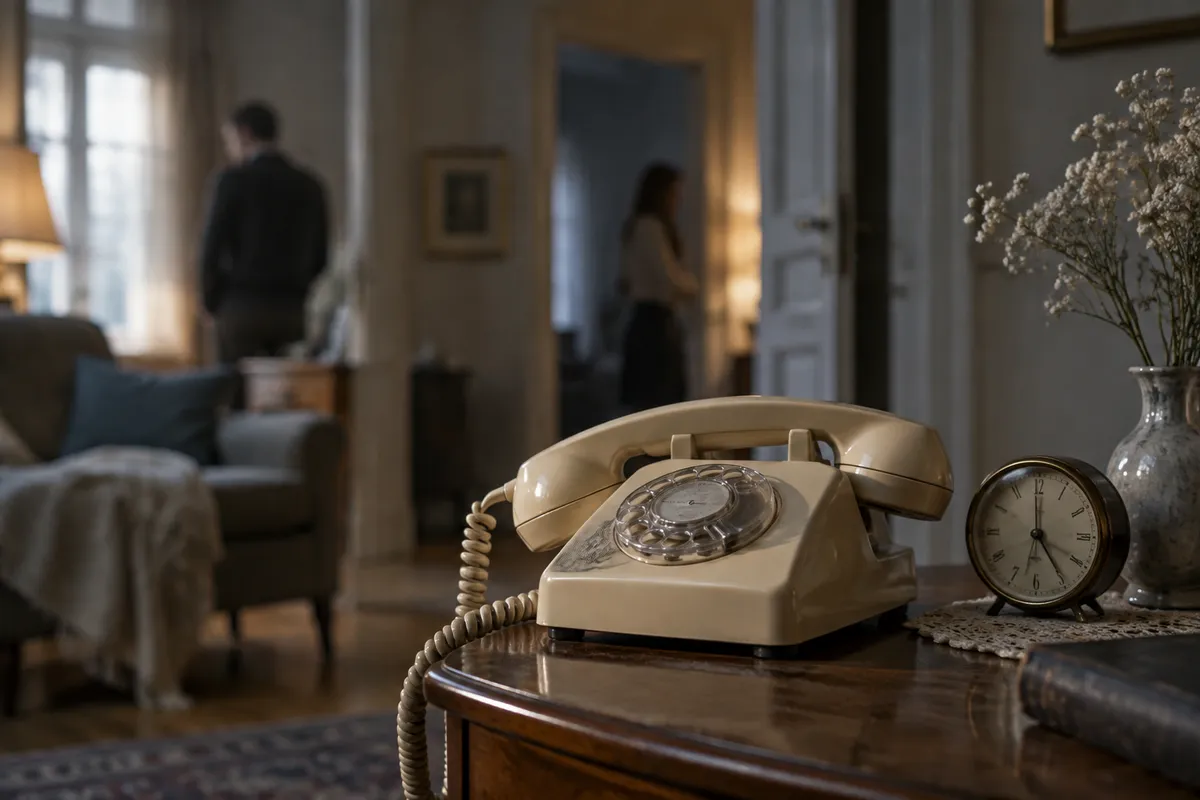
Prince William and Prince Harry have both expressed regret over how short their final phone call with their mother, Princess Diana, was, per a report from InStyle. The call took place on August 30, 1997. Diana died the next day, August 31, in a car crash in Paris. William was 15. Harry was 12.
This is a story about grief, not gossip, so the usual wink-and-nudge register stays in the drawer. What's left is a plainly human point, and it's the reason the story keeps resonating.
What we actually know
The facts available here are few, and they're worth stating precisely:
- The brothers' final phone call with Diana happened on August 30, 1997.
- Per InStyle's reporting, both William and Harry have expressed regret at how brief it was.
- Diana died in a car crash in Paris the following day, when her sons were 15 and 12.
That's the confirmed core. The details of the call itself, such as exactly what was said or how long it lasted, aren't something we can responsibly fill in beyond that, so we won't. What the brothers have said about it is theirs to say, in their own words and on their own terms.
Why a short call becomes a lifelong weight
The angle that gives this story its staying power is the one most of us recognize from our own lives: nobody knows when a goodbye is the goodbye.
A phone call between a mother and her two boys is about as ordinary as moments get. Kids at the tail end of a summer, a parent checking in. There's no reason, in the moment, to treat it as anything but routine. Nobody lingers on a conversation they assume is the first of many more.
That's what makes this kind of regret so durable. It isn't really about what was said. It's about the unfairness of an ordinary moment being retroactively loaded with enormous meaning. The call didn't change. Everything around it did.
It's hard not to see why this lands with so many people who have no connection to royalty at all. Almost everyone has a version: the quick call cut short, the "talk later" that never happened. The princes' version is just unusually public.
The universal detail inside a very unusual life
The lives of William and Harry have been lived under a degree of scrutiny few people can imagine. Their mother's death played out in front of the world, and the public has been invested in the family's story ever since. Public fascination with Diana's legacy and with her sons' emotional lives remains strong, especially amid continued attention on the royal family.
But the thing that cuts through all that noise is how small and relatable this particular regret is. Not a grand fallout or a dramatic what-if, just a phone call that felt like any other. That's the part that humanizes two of the most photographed people alive: they carry the same quiet ache that anyone who has lost a parent suddenly might recognize.
Why this keeps resurfacing
Diana remains one of the most enduring figures in pop culture, and stories about how her sons process losing her tend to travel. Part of it is the sheer scale of her legacy. Part of it is that William and Harry were children when it happened, which gives their reflections on it a particular tenderness.
It's also worth being clear about what this coverage is and isn't. It's a reflection on grief, drawn from what the brothers have shared and InStyle has reported. It isn't a revelation, a scandal, or a hint of anything unresolved between anyone but them and their memories. Reading more into it than that would be projecting.
The takeaway nobody asked for, but everyone knows
There's a reason "I wish I'd stayed on the phone longer" is one of the most common sentences in the language of loss. It's not a failure of love. It's a consequence of living forward, in a world where we can't know which conversation is the last.
William and Harry's regret over that August 30 call doesn't say anything about how they felt about their mother. If anything, the length of time they've carried it says everything. People don't hold on this long to a moment that didn't matter.